
Cavity Pocket
-
$97.13 inc GSTPrice:$88.30 ex GST
-
$62.68 inc GSTPrice:$56.98 ex GST
-
$77.19 inc GSTPrice:$70.17 ex GST
-
4214C.50SNStock Level:Available to Order$130.32 inc GSTPrice:$118.47 ex GST
-
4214CT.50SNStock Level:Available to Order$160.39 inc GSTPrice:$145.81 ex GST
-
$130.32 inc GSTPrice:$118.47 ex GST
-
$160.39 inc GSTPrice:$145.81 ex GST
-
$48.70 inc GSTPrice:$44.27 ex GST
-
$74.27 inc GSTPrice:$67.52 ex GST
-
$48.70 inc GSTPrice:$44.27 ex GST
-
$77.24 inc GSTPrice:$70.22 ex GST
-
$78.96 inc GSTPrice:$71.78 ex GST
-
$74.47 inc GSTPrice:$67.70 ex GST
-
$117.49 inc GSTPrice:$106.81 ex GST
-
$117.49 inc GSTPrice:$106.81 ex GST
-
$120.44 inc GSTPrice:$109.49 ex GST
-
$51.25 inc GSTPrice:$46.59 ex GST
-
$76.63 inc GSTPrice:$69.66 ex GST
-
$76.63 inc GSTPrice:$69.66 ex GST
-
$79.98 inc GSTPrice:$72.71 ex GST
-
TT697SCStock Level:In Stock - Low Availability$122.71 inc GSTPrice:$111.55 ex GST
-
$115.17 inc GSTPrice:$104.70 ex GST


Cavity Pocket Door Hardware
Cavity pocket doors (also called pocket sliding doors) are a smart, space-saving solution for modern homes and commercial fitouts—sliding neatly into the wall cavity to maximise usable floor area and create a clean, minimalist look. To make a pocket door feel premium and perform reliably, you need the right combination of hardware: flush pulls and edge pulls, sliding locks and latches (including privacy and keyed options), track and roller systems, guides, strikes and plates, door stops and bumpers, plus the accessories that keep everything aligned and smooth. At John Barnes Group, you can buy cavity pocket door hardware online with options suited to internal and (where the system allows) select external-style applications across Brisbane, Queensland, New South Wales and Australia-wide.
Why Pocket Door Hardware Is Different
Unlike hinged doors, pocket doors don’t swing—so the hardware priorities change. You’re not choosing butt hinges or standard door closers as the “main event”; instead, performance comes from the sliding system (track, rollers, guides and stops), plus the touch points the user interacts with (flush pulls, locks and latches). The best cavity pocket door hardware feels effortless: it glides quietly, doesn’t rattle, sits neatly flush when closed, and offers the right level of privacy or security for the space.
Key Benefits for Residential and Commercial Projects
Save Space Without Sacrificing Style
Pocket doors are ideal where a swing door would clash with furniture, narrow hallways or tight room layouts. With the right flush pulls and edge pulls, you keep the door face clean and contemporary—perfect for modern apartments, townhouses and office partitions.
Smoother Movement, Less Noise
Quality track and roller hardware reduces drag, wobble and vibration. Add well-matched guides, stops and bumpers, and your pocket door will open and close with a quieter, more controlled feel—especially important for bedrooms, meeting rooms and consult spaces.
Privacy and Access Control Where You Need It
From bathroom privacy to office interview rooms, pocket door locks and latches let you tailor function to the room. Brands such as Lockwood and Dormakaba are often selected where dependable performance is essential, while Zanda and Barben options can help maintain a consistent, design-led look across a project.
What’s Included in Cavity Pocket Door Hardware
Flush Pulls and Flush Handles
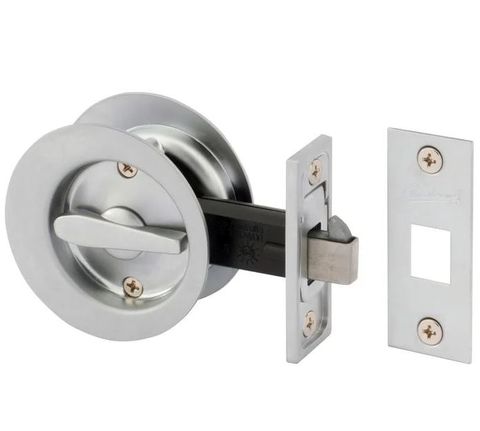
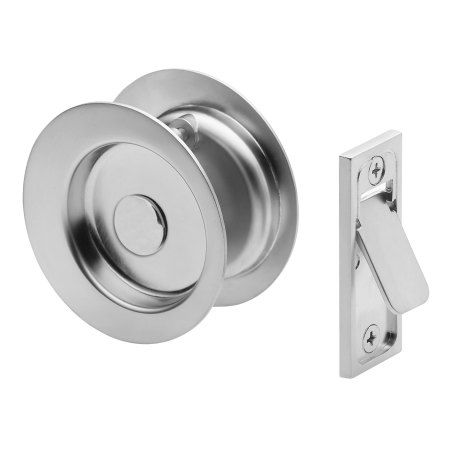
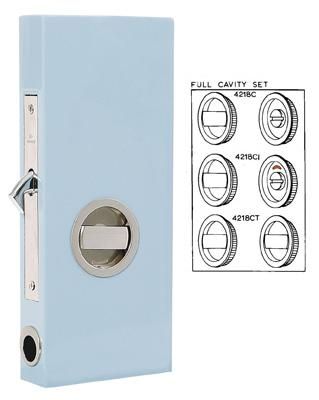
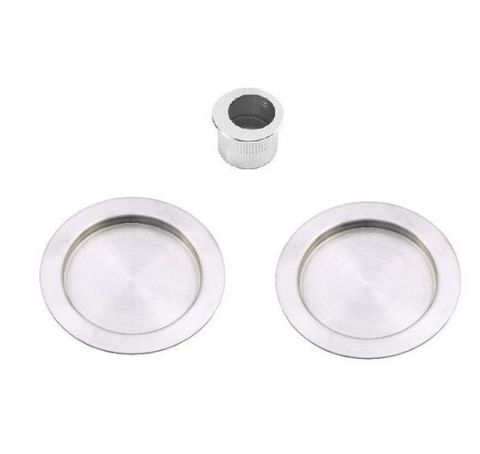
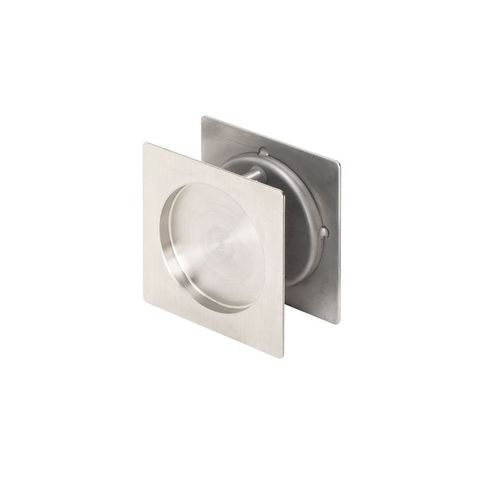
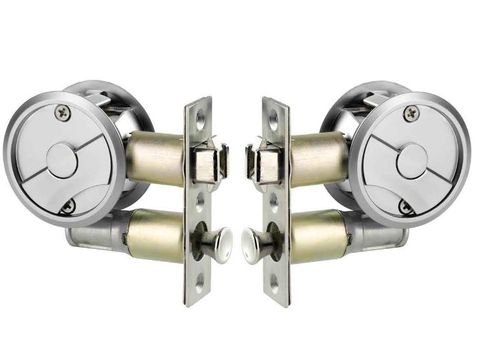
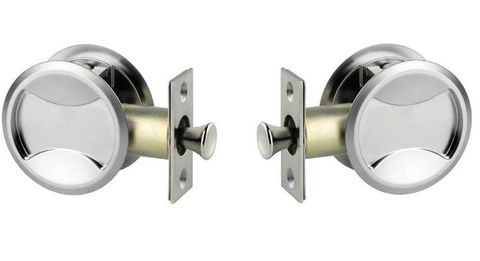
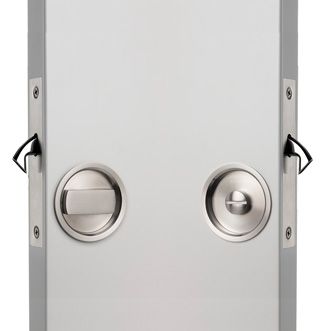
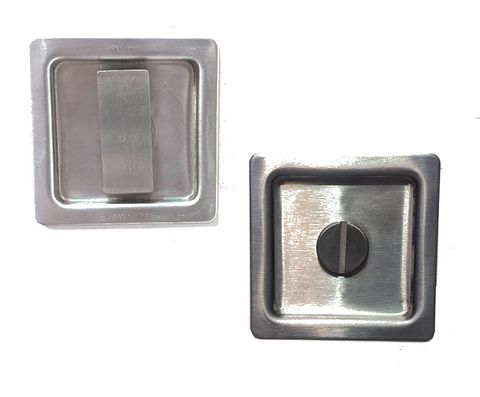
Flush pulls are the signature hardware choice for pocket doors. They sit level with the door face, reducing snagging and keeping the door able to disappear fully into the cavity. For a cohesive architectural finish, select shapes and profiles that match your wider door furniture—clean contemporary lines, soft curves, or more statement styling—then coordinate finishes such as matte black, stainless steel, or warm metallic tones that pair well with timber, painted doors and modern interiors. Zanda and Barben ranges are popular when you want a premium, design-forward feel without compromising everyday usability.
Edge Pulls (To Retrieve the Door)
When a door slides fully into the pocket, you still need a way to pull it back out. Edge pulls solve this problem neatly by providing a discreet finger pull on the door edge. They’re a small detail that makes a big difference in daily use—especially for doors that are frequently left open, like laundries, pantries and ensuite entries.
Sliding Door Locks, Latches and Privacy Sets
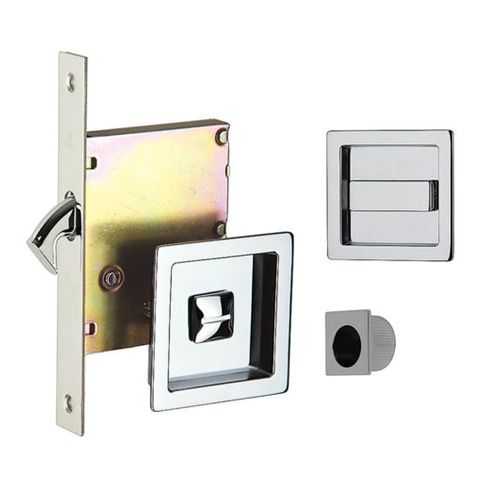
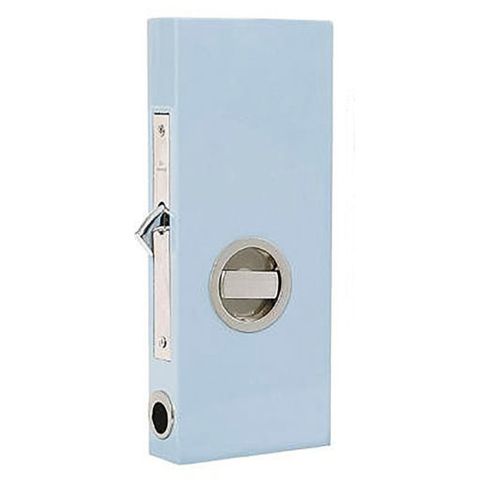
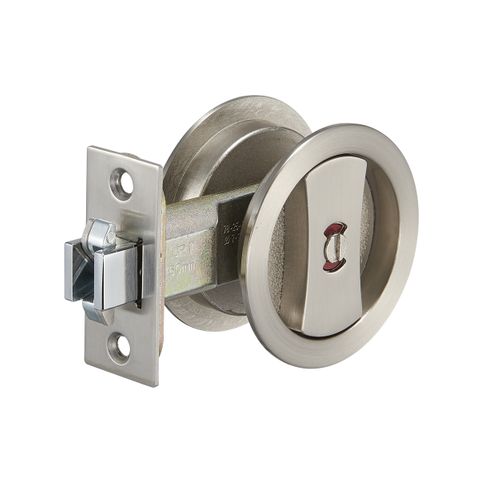
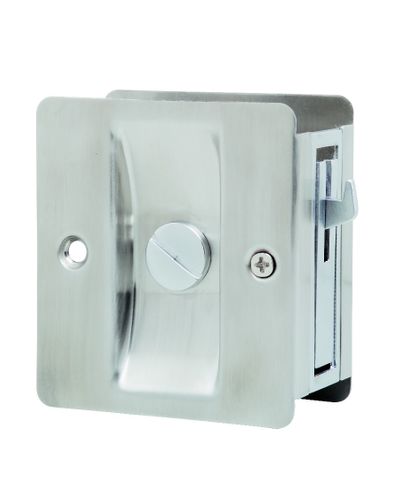
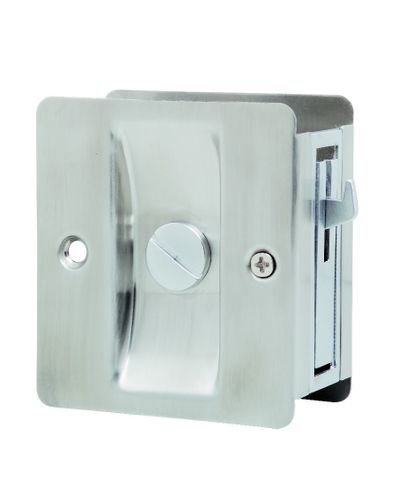
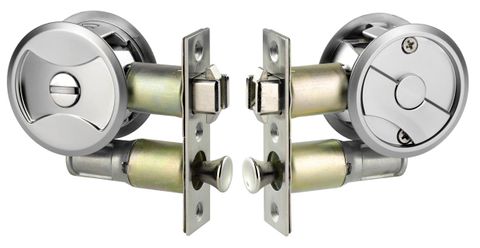
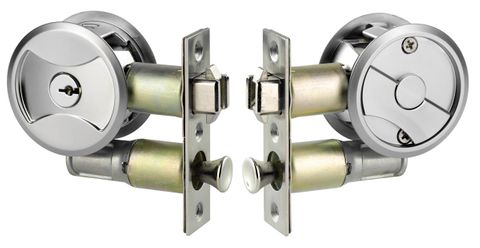
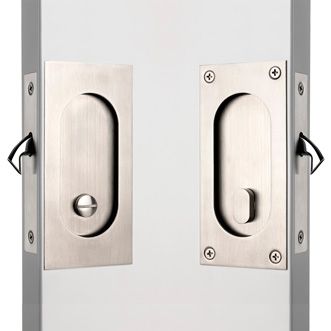
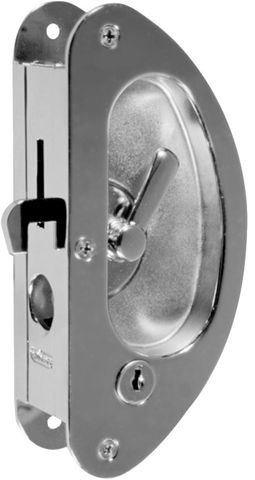
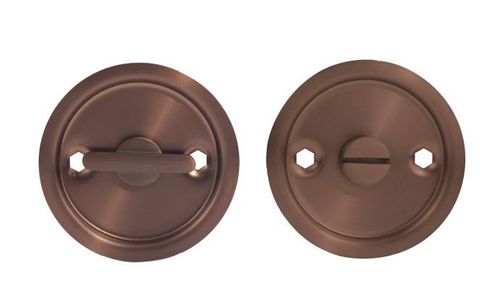
Pocket doors commonly use specialised sliding lock bodies (often hook-style) and privacy latches designed to work with a sliding action. For bathrooms and bedrooms, privacy functions provide a clear “occupied” outcome without needing a bulky handle. For office spaces, consult rooms or storerooms, keyed pocket door locks can add controlled access where required. Lockwood solutions are a common choice when robustness and reliable engagement matter, while Dormakaba options are frequently considered in commercial environments where consistency across a site is important.
Cylinders and Keying Options (Where Applicable)
Not every pocket door needs a keyed cylinder, but where security or access control is required, the right cylinder format and compatible lock case are critical. This can be particularly relevant for internal commercial doors, back-of-house areas, or spaces that need restricted access. If you’re standardising across a building, selecting compatible cylinder formats can simplify keying strategies and maintenance over time.
Track Systems, Rollers and Hangers
The sliding system is the engine of a pocket door. Track and roller quality influences everything: smoothness, noise, long-term alignment and how “premium” the door feels. When selecting track and rollers, consider door weight, frequency of use (residential vs high-traffic commercial), and whether you want upgrade features like smoother glide or more controlled movement. In many pocket door builds, reliable track systems are a key factor in reducing call-backs for sticking, scraping or rattling doors.
Soft-Close, Dampers and Controlled Closing
While traditional door closers are generally for swing doors, pocket doors can still benefit from “closer-like” control through soft-close mechanisms or dampers integrated into the sliding system. These options help reduce slamming into the jamb, improve user comfort, and support a quieter close—ideal for bedrooms, meeting rooms and premium residential projects. In commercial settings, controlled closing can also protect the door, frame and hardware from impact wear.
Guides, Floor Guides and Anti-Rattle Components
Guides keep the door stable as it moves, helping prevent bottom swing and reducing noise. Floor guides are commonly used to maintain alignment without visually dominating the doorway. Pairing the right guide with the correct track/roller setup is one of the simplest ways to improve how a pocket door feels.
Strikes, Keeps, Face Plates and Jamb Hardware
A pocket door can only lock cleanly if the strike/keeper and face plates are aligned and suited to the lock body. Selecting the right strike plate or keeper helps the latch or hook engage smoothly, improving security and reducing frustrating “mis-hit” issues. Finishing components also matter aesthetically—especially on minimalist doors where every visible line is intentional.
Bolts and Double Pocket Door Options
For double pocket door configurations (two leaves meeting in the middle), additional hardware may include flush bolts or coordinated latching solutions depending on how you want the opening to function. The right selection helps keep the meeting stile tidy, stable and easy to operate.
Stops, Bumpers and End-of-Travel Protection
Door stops for pocket doors are typically integrated as track end stops or bumpers to cushion the door at the end of travel. These help prevent hard impacts that can loosen fixings or damage door edges over time—particularly valuable in high-use areas like office corridors, retail back rooms or busy family homes.
Finishing Details
Seals and thresholds are not usually the main focus for cavity pocket doors, but minor finishing details (like neat jamb finishing elements and tidy clearances) can improve perceived quality. The priority remains smooth sliding performance and well-matched lock/handle hardware.
Choosing the Right Pocket Door Hardware
Start With Function: Passage, Privacy or Keyed
For living areas and general access, passage-style flush pulls and simple latching may be all you need. Bathrooms and bedrooms commonly suit privacy pocket door locks, while offices, storerooms and controlled areas may require keyed locking. Selecting the function first helps you narrow down compatible lock bodies, strikes and pulls.
Match Hardware to Door Weight and Traffic
A lightweight residential door and a heavy, frequently used commercial door should not share the same assumptions. For higher traffic, prioritise robust track/roller systems, stable guides and durable lock engagement. This is where commercial-proven ranges—often specified from brands like Dormakaba and Lockwood—can help reduce maintenance issues and keep performance consistent.
Coordinate Finishes for a Modern Architectural Look
Pocket doors often sit in minimalist interiors, so finish coordination is a big deal. Matte black suits modern and contemporary palettes, stainless steel works across both residential and commercial environments, and brass tones can add warmth in premium projects. Zanda and Barben options can help you carry the same design language across cavity sliders, swing doors and cabinetry hardware throughout a build.
Local Support: Brisbane, Queensland, New South Wales and Australia-Wide
John Barnes Group supports cavity pocket door projects across Brisbane and Queensland, from residential renovations to commercial fitouts where space efficiency and clean design matter. We also supply customers in New South Wales and ship Australia-wide, making it easier to standardise pocket door hardware across multi-site portfolios, staged construction programs, and ongoing maintenance. Whether you’re upgrading a single internal cavity slider or specifying a consistent hardware schedule across an entire tenancy, you’ll find cavity pocket door hardware options designed for smooth movement, reliable function and modern finishes.
Frequently Asked Questions
What hardware do I need for a cavity pocket door?
Most pocket doors need flush pulls (and often an edge pull), a sliding lock or latch (passage, privacy or keyed), plus the sliding system components such as track, rollers/hangers, guides and stops. You may also need compatible strikes/keepers and finishing plates for clean lock engagement.
Can I use standard hinges on a pocket door?
Pocket doors are sliding doors, so they typically don’t use hinges or pivots like swing doors. The “movement hardware” is the track and roller system, supported by guides and stops to keep the door stable and aligned.
What’s the difference between a flush pull and an edge pull?
A flush pull is the main handhold on the door face, designed to sit level so the door can slide into the cavity. An edge pull is a small pull on the door edge that helps you retrieve the door when it’s fully recessed into the pocket.
Do cavity pocket doors have privacy locks?
Yes. Privacy pocket door locks are common for bathrooms, bedrooms and consultation rooms. They’re designed for sliding action and typically work with flush pulls, giving you privacy without bulky protruding hardware.
Are keyed locks available for pocket doors?
Yes, keyed pocket door lock options are available for spaces that need controlled access, such as offices, storerooms or back-of-house areas. Choosing a compatible lock body, cylinder (where applicable) and strike/keeper is important for smooth operation.
Can I add “soft close” to a cavity pocket door?
In many systems, yes. Soft-close or damper components can add controlled closing to reduce slamming and improve the feel of the door. The best option depends on the track/roller system and the door weight.
What finishes are most popular for pocket door hardware?
Matte black and stainless steel are popular in modern Australian interiors because they suit minimalist design and pair well with aluminium, glass and timber elements. Brass tones are also used in premium spaces where you want a warmer, more decorative look.
Which brands are commonly used for cavity pocket door hardware?
Lockwood and Dormakaba are frequently chosen where reliable performance is essential, particularly in commercial settings. For design-led projects and coordinated finishes, Zanda and Barben offer premium styling options that work well across contemporary residential and architectural applications.
Why Choose John Barnes Group?
John Barnes Group makes it easy to specify cavity pocket door hardware that feels smooth, looks intentional and performs long-term. With trusted functional solutions from Dormakaba and Lockwood, and premium design options from Zanda and Barben, you can build a complete pocket door hardware set—flush pulls, sliding locks, guides, track components and the finishing accessories that make the difference. Based in Brisbane and supporting Queensland, New South Wales and Australia-wide delivery, we help you keep projects consistent, durable and professionally finished.